Your First Gym Program, Step by Step
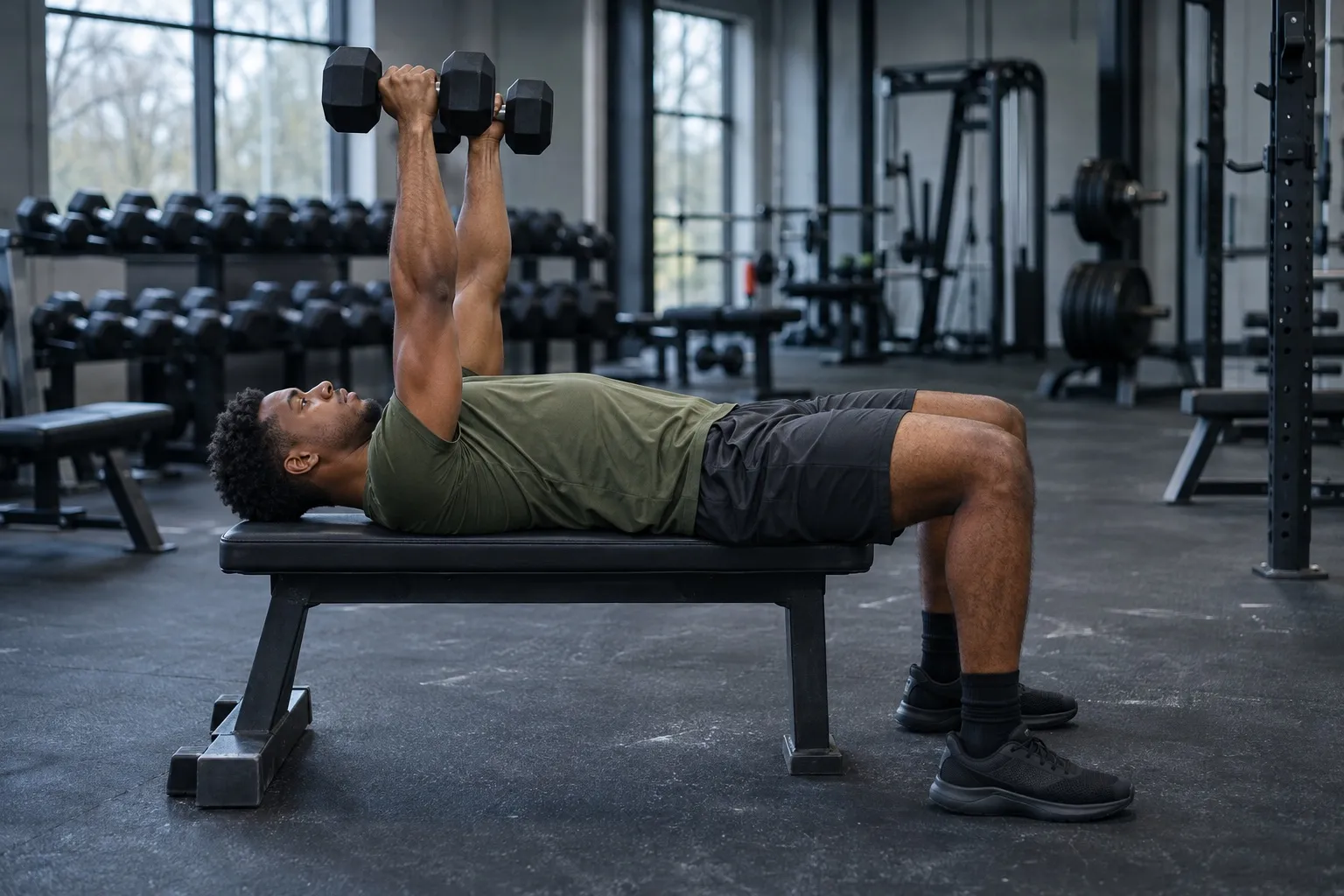
A good first program is short, repeatable, and a little boring. You’ll do the same handful of movements each week, add a bit of weight when you’ve earned it, and write everything down. That’s the whole trick, and it works for months.
Here’s how to put one together in six steps.
Step 1: Pick your days
Choose the number of days you can lift every week, even in a busy one. For most beginners, that’s three days on full-body sessions with a rest day between them, such as Monday, Wednesday, and Friday. Two days works too if that’s what your week allows.
If you’re unsure, how many days a week to lift walks through the choice. Three days or fewer points to full body. Once you reach four, see full body vs. split workouts.
Step 2: Choose one exercise for each movement
Every session should cover five basic movements. Pick one exercise for each from the list below. Choose the version you can do safely with the equipment you have, not the one that looks most impressive.
| Movement | Good first choices |
|---|---|
| Squat | Goblet squat, leg press, barbell back squat |
| Hip hinge | Romanian deadlift with dumbbells or a barbell, hip thrust |
| Horizontal push | Dumbbell bench press, push-up, machine chest press |
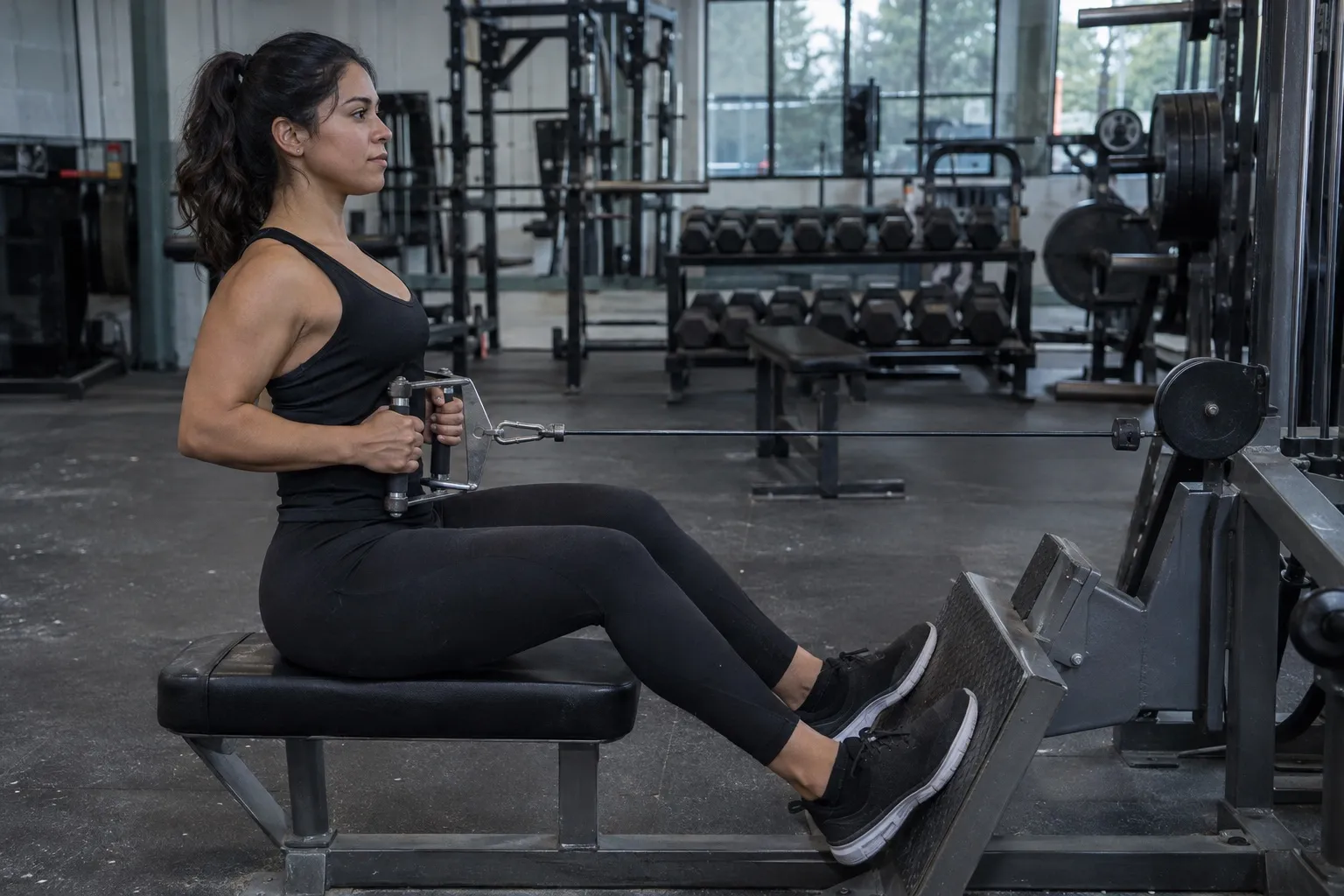
| Pull | Cable row, lat pulldown, one-arm dumbbell row |
| Vertical push | Seated dumbbell overhead press, machine shoulder press |
Then add one smaller exercise at the end if you have time, such as a plank, a curl, or a calf raise.
Machines and dumbbells are a fine place to start. They let you learn to push hard with less setup and less to go wrong. You can move to barbell versions once the basic movements feel solid.
Step 3: Split the exercises into two sessions
Instead of doing all five movements in every session, make two sessions and take turns.
| Session A | Session B |
|---|---|
| Squat | Hip hinge |
| Horizontal push | Vertical push |
| Pull | Pull (a different exercise) |
| One smaller exercise | One smaller exercise |
On three days a week, run A, B, A, then B, A, B the following week. On two days, run A and B once each.
Taking turns keeps sessions under an hour and gives each lift a little more recovery.
Step 4: Set sets, reps, and rest
Start with these targets:
- Main exercises: 3 sets of 8 to 10 reps.
- Smaller exercises: 2 or 3 sets of 10 to 15 reps.
- Rest: about 2 minutes between sets of the main exercises, and 60 to 90 seconds for smaller ones.
Pick a weight you could lift for about two more reps than the target when you finish a set. The last couple of reps should feel hard but stay clean, with no grinding or form breaking down. If you’re not sure, start lighter. You’ll catch up within a few weeks.
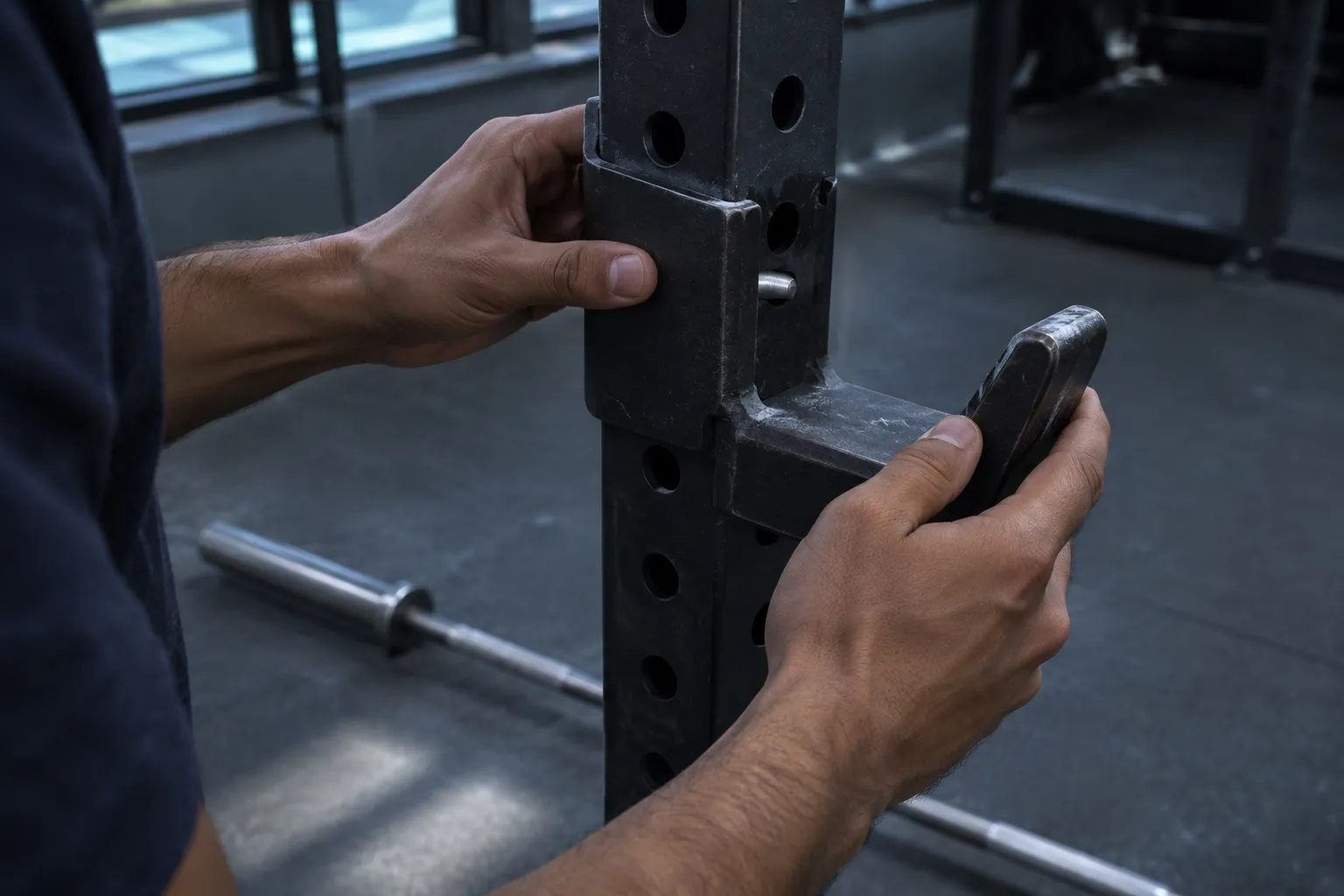
Warm up before your first exercise with two or three lighter sets of it: one with an empty bar or light dumbbells, then one or two closer to your working weight.
Step 5: Add weight with a simple rule
Use the top of your rep range as the signal:
- When you hit the top of the range on every set, such as 3 sets of 10, add weight next session.
- Add the smallest step you can: 5 lb (2.5 kg) on lower-body barbell lifts, 2.5 to 5 lb (1 to 2.5 kg) on upper-body lifts, or the next dumbbell up.
- The heavier weight drops you back toward 8 reps. Build back up to 10, then repeat.
This is called double progression: first you add reps, then you add weight. It keeps working for a long time, and it never asks you to guess.
If you miss the bottom of the range, here fewer than 8 reps, two sessions in a row, take the weight back down about 10 percent and build up again.
Step 6: Write everything down
Record the weight and reps of every set, and a short note when something felt off. Your log is how Step 5 works: you can’t add weight on schedule if you don’t remember what you did last time.
Before each session, look at the last time you did it. Your goal for the day is to match it or beat it by a rep or a little weight.
An example first program
Here’s a complete three-day plan built from the steps above.
| Session A | Session B | |
|---|---|---|
| 1 | Goblet squat, 3 × 8–10 | Dumbbell Romanian deadlift, 3 × 8–10 |
| 2 | Dumbbell bench press, 3 × 8–10 | Seated dumbbell overhead press, 3 × 8–10 |
| 3 | Cable row, 3 × 8–10 | Lat pulldown, 3 × 8–10 |
| 4 | Plank, 3 × 30 seconds | Dumbbell curl, 2 × 10–15 |
Each session takes about 45 to 55 minutes with warm-ups and rest.
How long to run it
Stay on your first program for at least eight to twelve weeks. Change it only when one of these happens:
- An exercise doesn’t suit you. Swap it for another choice from the same row in Step 2 and keep everything else.
- You stop adding reps or weight on most lifts for three or four weeks, even though you’re sleeping and eating reasonably well.
- Your schedule changes enough that your days no longer fit.
If something hurts beyond normal muscle soreness, stop that exercise and have it checked by a qualified professional.
Most beginners change programs too early. The progress comes from repeating the same work and slowly making it heavier, so give it time.